



Table of Contents
Introduction
A dripping faucet in January. A roof leak during spring thaw. A furnace that quits when the temperature drops to -20°C. For Canadian homeowners, these aren’t hypothetical scenarios—they are inevitable realities of owning property in a country with extreme seasonal weather. thehometrotters homerepairs has emerged as a practical resource and service framework designed to help homeowners navigate these challenges with confidence and cost-awareness.
Created by Trisha McNamara, TheHomeTrotters began as a platform to share practical, affordable DIY solutions for common household problems. Over time, it has evolved into a comprehensive approach to home care that balances do-it-yourself guidance with clear recommendations for when professional help becomes necessary. For Canadian readers, this dual perspective matters because our climate and regulatory environment create unique demands on both homes and the people who maintain them.
This guide explains what thehometrotters homerepairs offers, how it fits within the Canadian home repair industry, what you can reasonably tackle yourself, and when you need to call a licensed professional. You will also find current cost ranges, seasonal maintenance schedules tailored to Canadian conditions, and practical advice for protecting your investment.
What Is thehometrotters homerepairs?
thehometrotters homerepairs represents a dual approach to home care. At its core, it functions as a practical DIY guide that gives homeowners simple, affordable methods to fix common problems without hiring a professional. The platform also connects homeowners with professional service providers for tasks that exceed safe DIY boundaries.
Trisha McNamara founded TheHomeTrotters on the principle that home repair information should be accessible, realistic, and beginner-friendly. The content avoids the overly polished, perfectionist tone found in many home improvement media. Instead, it focuses on what an average homeowner can actually accomplish with basic tools and limited time.
The platform covers everything from quick fixes like unclogging drains and tightening loose hinges to more involved projects like patching drywall, sealing drafty windows, and performing basic appliance troubleshooting. Each guide emphasizes cost-effective materials and step-by-step instructions that don’t require specialized equipment.
Beyond the DIY content, thehometrotters homerepairs also addresses the professional side of home maintenance. It provides criteria for evaluating home repair services, questions to ask before hiring, and red flags that indicate a provider may not deliver reliable work. This balanced approach makes the resource valuable whether you prefer to roll up your sleeves or hire someone else to do the work.
The Canadian Home Repair Landscape
Understanding thehometrotters homerepairs requires context about the industry it operates within. Canada’s home repair and maintenance sector employs thousands of people and represents billions in annual household spending.
According to Innovation, Science and Economic Development Canada, the personal and household goods repair and maintenance industry group includes approximately 12,401 establishments across the country, with 99.9% employing fewer than 100 people. The average revenue for these businesses sits at $200,100, and 85.6% operate profitably.
Statistics Canada data from the second quarter of 2026 shows Canadian households spent $949 million on materials for dwelling maintenance and repair, plus $182 million on related services during that single quarter. These figures reflect only a portion of total home-related spending, which also includes renovations, appliance purchases, and insurance.
Canadian homeowners commonly follow the “1% rule” when budgeting for maintenance: setting aside 1% to 2% of their home’s value annually for repairs and upkeep. For a $600,000 home, that translates to $6,000 to $12,000 per year, or $500 to $1,000 monthly. New homes require less immediate spending, but no property escapes maintenance indefinitely.
The Canadian Home Builders’ Association Renovation Market Index registered 50.3 in mid-2026, indicating neutral sentiment among renovation professionals. This balanced outlook suggests homeowners continue investing in their properties but approach spending with caution.
Provincial Regulatory Differences
Canada has no national contractor licensing system. Construction and repair work falls under provincial and municipal jurisdiction, creating a patchwork of requirements across the country.
Quebec maintains the most comprehensive system through the Régie du bâtiment du Québec (RBQ), which requires contractor licences for most renovation and construction work. British Columbia and Alberta license specific trades and regulate residential builders through provincial bodies. Ontario and most other provinces do not license general renovation contractors directly, instead requiring certification for individual trades such as electrical, plumbing, and gas work.
In every province, electrical work that involves adding, modifying, or extending circuits requires a licensed electrician. The same principle applies to plumbing systems and gas installations. These rules exist for safety reasons, and violations can result in significant fines, voided insurance, and real danger to occupants.
Core Services and Solutions Covered
thehometrotters homerepairs addresses the full spectrum of residential repair needs. The platform organizes its guidance by problem type and complexity, helping readers quickly determine whether a task falls within DIY capability or requires professional intervention.
Plumbing Solutions
Plumbing issues rank among the most common household problems. TheHomeTrotters provides guidance for basic fixes like unclogging drains with a plunger or hand auger, replacing faucet cartridges or washers, swapping toilet flappers, changing showerheads, and replacing supply line hoses. These tasks require minimal tools and carry low risk when performed correctly.
The platform clearly marks the boundary where DIY ends and professional help begins. Work behind walls, gas line connections, water heater installations, sewer or main drain issues, and any repair requiring a permit all call for a licensed plumber. Recurring clogs that return within weeks, standing water, damp drywall, or sewage odours also warrant professional attention.
Electrical Guidance
Electrical work demands the clearest distinction between safe DIY and mandatory professional service. TheHomeTrotters covers only the simplest electrical tasks that do not involve circuit modification: changing light bulbs, replacing existing light fixtures with identical units (where permitted locally), resetting tripped breakers, and testing outlets with a multimeter.
Anything beyond these basics requires a licensed electrician. In Ontario, electricians must hold a Certificate of Qualification from Skilled Trades Ontario and work with an Electrical Contractor registered with the Electrical Safety Authority. Similar regulatory bodies operate in each province.
Carpentry and Structural Repairs
Carpentry tasks span a wide range of complexity. TheHomeTrotters offers guidance for straightforward projects like repairing squeaky floors, tightening loose handrails, patching small holes in drywall, replacing door hardware, and installing shelf brackets. These tasks require basic tools and patience rather than specialized training.
Structural modifications, load-bearing wall alterations, foundation repairs, and major framing work fall outside DIY territory. These projects typically require building permits, engineering input, and experienced contractors.
Painting and Finishing
Painting represents one of the most accessible DIY projects for homeowners. TheHomeTrotters covers surface preparation, paint selection, application techniques, and cleanup. The platform also addresses related finishing work like caulking, trim installation, and basic wallpaper removal.
While painting itself rarely requires a permit, homeowners should still exercise caution when working at heights or preparing surfaces that may contain lead paint, a particular concern in older Canadian homes built before the 1970s.
Interior Home Repairs: What Every Canadian Homeowner Should Know
Canadian homes face specific interior challenges driven by climate. Extreme temperature swings, dry winter air from heating systems, and humidity fluctuations all create wear on interior components.
Drywall and Plaster
Drywall cracks develop naturally as homes settle and as building materials expand and contract with temperature changes. TheHomeTrotters provides step-by-step guidance for repairing small holes (under 100mm) using basic patching compounds, mesh tape, and sandpaper. A DIY repair typically costs $15 to $40 in materials and requires 2 to 3 hours spread over two days to allow for drying. Professional repair for the same issue ranges from $150 to $300 including materials, texture matching, and paint.
Larger drywall damage—such as an entire panel section—costs $50 to $100 in materials for DIY and requires 4 to 6 hours over three days. Professional repair for this scale of damage typically starts at $400.
Flooring Maintenance
Flooring takes daily abuse from foot traffic, furniture movement, and seasonal moisture changes. TheHomeTrotters covers basic maintenance for different flooring types: vacuuming and spot-cleaning carpets, damp-mopping hardwood with appropriate cleaners, re-caulking tile grout lines, and addressing minor scratches on laminate surfaces.
Hardwood floor refinishing represents a more complex decision. DIY refinishing requires renting a drum sander ($70 to $120 per day) and an edge sander ($35 to $60 per day), plus purchasing sandpaper, stain, and finish. While the material savings are substantial, the learning curve is steep. Uneven sanding can permanently damage floors, and dust control becomes a major challenge in occupied homes.
Kitchen and Bathroom Fixtures
Kitchens and bathrooms contain the highest concentration of plumbing fixtures, making them frequent sources of repair needs. TheHomeTrotters provides practical guidance for replacing faucet aerators, fixing running toilets by adjusting flapper chains or replacing worn flappers, unclogging sink drains, and re-caulking around tubs and sinks.
Bathroom renovations represent one of the most common home improvement projects in Canada. A typical 2026 bathroom remodel costs $12,000 to $35,000 when professionally completed, with high-end projects reaching $60,000 or more. DIY bathroom vanity and tile work can cost $4,000 to $8,000 in materials, but waterproofing errors rank among the costliest mistakes for homeowners attempting this work themselves.
Heating, Ventilation, and Air Conditioning
HVAC systems work harder in Canada than in many other countries. TheHomeTrotters emphasizes basic maintenance tasks that extend equipment life and improve efficiency: changing furnace filters every 1 to 3 months, clearing debris around outdoor air conditioning units, keeping supply and return vents unobstructed, and scheduling annual professional inspections.
Furnace repairs and air conditioner servicing require certified technicians in every province. Attempting DIY repairs on gas-fired equipment creates serious safety risks including carbon monoxide exposure and gas leaks.
Exterior Home Repairs: Weathering Canada’s Climate
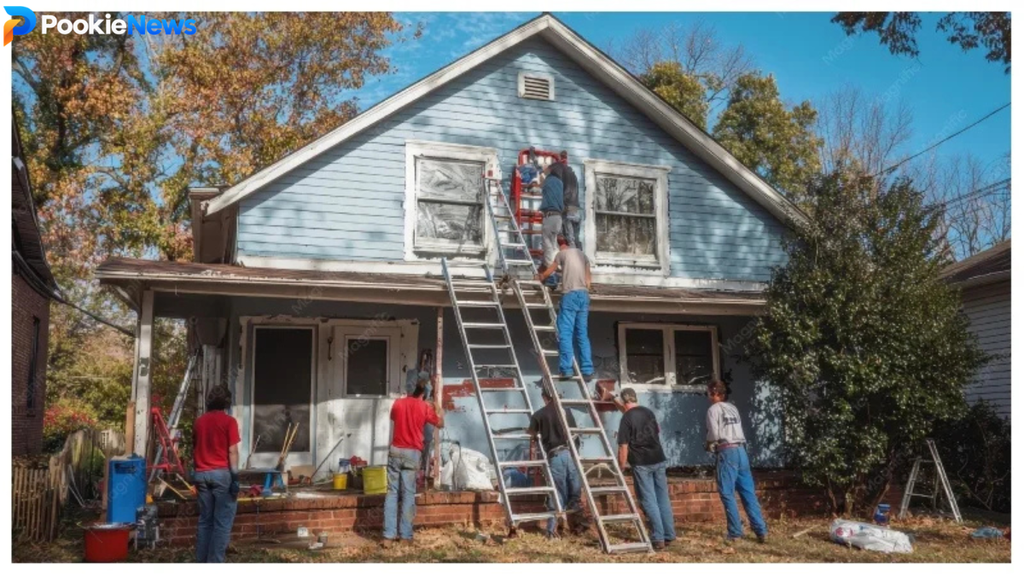
A Canadian home’s exterior takes a beating. Freeze-thaw cycles, heavy snow loads, driving rain, intense summer sun, and wind-driven ice all test the durability of exterior components.
Roof Maintenance and Repair
Roofs represent one of the most critical and expensive home systems. Most Canadian homeowners spend between $500 and $1,800 on a typical roof repair. Minor fixes like replacing a few shingles or resealing flashing joints fall at the lower end of that range, while multi-area leak repairs or partial re-decking approach the higher end. Extensive structural work, such as replacing rotted decking across a large section, can reach $3,000 to $6,000 or more.
TheHomeTrotters advises homeowners to perform visual roof inspections twice annually—in spring after snow melt and in autumn before winter weather arrives. Look for missing, curled, or cracked shingles, damaged flashing around chimneys and vents, and signs of water penetration in attic spaces.
While a homeowner can safely perform visual inspections from the ground using binoculars, actual roof repair work carries significant fall risks and generally requires professional expertise. Working on a steep, potentially icy roof exceeds the safety margin for most homeowners.
Gutter and Downspout Care
Clogged gutters cause more problems than many homeowners realize. When gutters fill with leaves and debris, water cannot drain properly. Instead, it overflows and runs down the exterior walls, potentially seeping into basements, damaging siding, and eroding foundation soil. In winter, trapped water freezes and expands, which can warp gutters and loosen fasteners.
TheHomeTrotters recommends cleaning gutters at least twice per year, typically in late spring and early autumn. Homeowners with many mature trees may need more frequent cleaning. The task requires a ladder, work gloves, a trowel or scoop, and a garden hose for flushing. Safety remains the primary concern—always maintain three points of contact on a ladder and avoid working near power lines.
Window and Door Maintenance
Windows and doors account for significant heat loss in Canadian homes. TheHomeTrotters provides guidance for inspecting and replacing weatherstripping, re-caulking exterior joints, lubricating moving hardware, and repairing damaged screens.
Professional window caulking in Canadian urban centres generally costs $2 to $6 per linear foot, depending on accessibility and the number of windows. DIY caulking requires only a caulk gun ($10 to $20), high-quality exterior caulking compound ($8 to $15 per tube), and patience. The quality of the finished bead matters more than the tool itself—a steady hand produces better results than an expensive gun.
Siding and Exterior Finishes
Canadian homes use various siding materials, each with different maintenance requirements. Vinyl siding, the most common choice in many regions, requires periodic washing with a garden hose or pressure washer (used on low setting to avoid damage). Wood siding needs regular painting or staining to prevent rot and insect damage. Fibre cement siding offers durability but still requires joint caulking maintenance.
TheHomeTrotters advises homeowners to inspect siding annually for cracks, loose panels, discolouration, and signs of moisture penetration behind the material. Early detection of siding problems prevents more costly structural repairs down the line.
DIY vs. Professional Repairs: A Canadian Guide
The decision to tackle a repair yourself or hire a professional involves more than just comparing dollar costs. Safety, legal requirements, skill level, time investment, and potential consequences of mistakes all factor into the equation.
What You Can Legally and Safely DIY
Canadian homeowners can generally perform cosmetic and non-trade work without professional licensing. This includes painting, flooring installation, backsplash tiling, cabinet refacing, basic drywall patching, gutter cleaning, weatherstripping replacement, and simple fixture swaps that do not involve modifying plumbing or electrical supply lines.
In Quebec, homeowners can perform repair, maintenance, and renovation work estimated at less than $20,000 without a licence, provided the work does not involve regulated trades like electrical, plumbing, or gas installations. Similar principles apply across other provinces, though specific dollar thresholds and requirements vary.
When You Must Hire a Professional
Certain tasks require licensed professionals by law across Canada:
- Electrical work: Adding circuits, modifying wiring, panel upgrades, and any work beyond simple bulb or fixture replacement
- Plumbing: Work behind walls, main drain repairs, water heater installation, gas line connections
- Gas fitting: Any work involving natural gas or propane lines and appliances
- Structural modifications: Altering load-bearing walls, foundation repairs, major framing changes
- HVAC servicing: Repairs to furnaces, boilers, and central air conditioning systems
These requirements exist because improper work in these areas can cause fires, explosions, carbon monoxide poisoning, flooding, and structural failure. The risks extend beyond the homeowner’s property to neighbouring homes and emergency responders.
Cost Comparison
DIY typically costs 40% to 60% less than hiring a contractor for cosmetic projects where the work is visible and mistakes are reversible. For example, a kitchen cabinet installation that costs $2,000 to $5,000 professionally might cost $500 to $1,500 in materials for a capable DIYer.
The following table compares costs for common repair tasks:
| Repair Task | DIY Cost (CAD) | Professional Cost (CAD) | DIY Feasibility |
| Small drywall hole repair | $15–$40 | $150–$300 | High |
| Faucet replacement | $75–$200 | $200–$350 | Medium |
| Toilet replacement | $150–$350 | $300–$600 | Medium |
| Window caulking (per window) | $10–$25 | $50–$150 | High |
| Interior room painting | $100–$300 | $300–$800 | High |
| Electrical panel upgrade | Not permitted | $1,500–$5,500 | None |
| Water heater installation | Not recommended | $1,800–$3,500 | None/Low |
The savings calculation should also account for the value of your time. If you value your time at $50 per hour and a faucet replacement takes you 2 hours longer than a professional, the DIY advantage narrows considerably. A handyman might charge $150 for the same job, making the total professional cost ($350) nearly identical to the DIY cost ($340+) once you factor in materials, tools, and your time.
The Hybrid Approach
Many Canadian homeowners find the most practical strategy combines DIY work with professional expertise. Handle the cosmetic and straightforward tasks yourself—painting, assembling and installing vanity cabinets, laying tile, demolition of finished spaces—and hire licensed tradespeople for electrical, plumbing, and gas work. This hybrid approach typically saves 30% to 40% compared to full professional service while keeping the dangerous and regulated work in qualified hands.
How Much Do Home Repairs Cost in Canada?

Costs vary significantly by region, with urban centres like Toronto, Vancouver, and Montreal generally commanding higher labour rates than smaller communities. The following trade hourly rates reflect typical 2026 pricing across Canadian markets:
| Trade | Hourly Rate Range (CAD) |
| General contractor | $80–$150/hr + 10–20% project management fee |
| Carpenter / cabinet installer | $70–$110/hr |
| Electrician | $90–$130/hr |
| Plumber | $100–$150/hr |
| Tile setter | $60–$100/hr |
| Painter | $40–$70/hr |
| Handyman | $50–$80/hr |
Major renovation projects follow broader budget ranges. A cosmetic kitchen refresh typically costs $10,000 to $25,000, while a full kitchen renovation runs $25,000 to $75,000. High-end custom kitchens can exceed $100,000. Bathroom remodels range from $12,000 to $35,000, and basement finishing costs $60 to $100 per square foot.
Homeowners should build a 15% to 20% contingency into every renovation budget. Material price volatility, hidden issues discovered during demolition, and scope changes all contribute to cost overruns. The projects that stay closest to budget are those with clear plans, fixed-price contracts, and disciplined decision-making throughout execution.
Seasonal Maintenance: A Canadian Homeowner’s Calendar
Canadian homes require different attention at different times of year. TheHomeTrotters emphasizes preventive maintenance over reactive repair, and a seasonal schedule helps homeowners stay ahead of problems before they become expensive.
Spring (March–May)
Spring inspection focuses on damage caused by winter weather. Walk the exterior perimeter looking for foundation cracks, damaged siding, and gravel buildup against the foundation. Clean gutters and downspouts to handle spring rains. Inspect the roof for missing shingles and damaged flashing. Check window wells for debris accumulation.
Inside, test sump pumps before heavy rains arrive. Change furnace filters and schedule air conditioning service if you use central cooling. Inspect basement walls and floors for signs of water penetration.
Summer (June–August)
Summer brings good weather for exterior projects. Inspect decks and fences for rot, loose fasteners, and splintering wood. Clean and repair exterior siding. Seal driveways and walkways. Trim tree branches that touch the roof or house.
Indoors, clean kitchen and bathroom exhaust fan covers. Check caulking around tubs, showers, and sinks. Test smoke alarms and carbon monoxide detectors. Deep clean the refrigerator condenser coils to improve efficiency.
Autumn (September–November)
Autumn preparation focuses on winter readiness. Clean gutters again after leaves fall. Drain and store garden hoses. Shut off exterior water valves. Inspect and clean the furnace, and schedule professional service if you haven’t already. Reverse ceiling fans to push warm air downward.
Check weatherstripping around windows and doors and replace as needed. Stock emergency supplies: flashlights, batteries, candles, matches, bottled water, and non-perishable food. Drain sprinkler systems to prevent freeze damage.
Winter (December–February)
Winter maintenance focuses on monitoring and quick response. Check for ice dams forming at roof edges. Keep walkways and driveways clear of snow and ice. Monitor interior humidity levels—too much causes condensation and mould; too little dries out wood and irritates respiratory systems.
Change furnace filters monthly during heavy heating season. Listen for unusual sounds from plumbing that might indicate freezing pipes. Keep cabinet doors under sinks open during extreme cold to allow warm air circulation around pipes.
Emergency Home Repair: When to Act Fast
Certain home repairs cannot wait. In Canada’s climate, delayed response to some issues can multiply damage and costs exponentially.
Burst Pipes
Frozen pipes represent one of the most common and destructive home emergencies. When water freezes, it expands by about 9%, creating pressure that can rupture even robust plumbing. A single burst pipe can release hundreds of litres of water per hour, causing structural damage, mould growth, and personal property loss.
If you discover a burst pipe, shut off the main water supply immediately. Open faucets to drain remaining water. Call a licensed plumber. Move valuable items away from the water. Do not attempt to repair a burst pipe yourself unless you have plumbing experience—the repair must hold under pressure, and an inadequate fix can fail catastrophically when you restore water service.
Roof Leaks During Active Precipitation
A roof leak during heavy rain or spring thaw requires immediate containment. Place buckets under drips. Move furniture and electronics away from the affected area. If you can safely access the attic, place a tarp or plastic sheeting over the leak source to redirect water. Do not attempt to climb on an exterior roof during active rain or snow—slippery conditions create extreme fall hazards.
Once the weather clears, assess whether you need a professional roofer. Small, localized leaks around flashing or vent boots sometimes respond to temporary sealant, but most roof leaks require proper material repair or shingle replacement.
Electrical Emergencies
Sparking outlets, burning odours from electrical panels, or circuits that repeatedly trip without obvious cause require immediate attention. Shut off the affected circuit at the breaker panel. Unplug devices from the problematic outlet. Call a licensed electrician. Do not attempt to investigate or repair wiring behind walls or in panels.
Gas Odours
If you smell natural gas (which distributors scent like rotten eggs), evacuate the building immediately. Do not turn lights on or off, use phones, or operate any electrical device that could create a spark. Move well away from the building and call your gas utility provider’s emergency line from a safe location.
My Opinion on thehometrotters homerepairs

After reviewing the available information about thehometrotters homerepairs and the broader Canadian home repair landscape, I see real value in what this platform offers, though it has limitations worth acknowledging.
The strongest aspect of thehometrotters homerepairs approach is its realism. Unlike many home improvement resources that present every project as achievable with the right attitude and a few basic tools, TheHomeTrotters draws clear lines between what homeowners can safely tackle and what requires professional expertise. This honesty matters. I have seen too many homeowners attempt work beyond their capability because an online guide made it look simple, only to create safety hazards or spend more fixing their mistakes than the original job would have cost.
The platform’s emphasis on preventive maintenance also aligns with what Canadian homeowners actually need. Our climate punishes neglect. A $15 tube of exterior caulking applied in autumn can prevent thousands of dollars in water damage the following spring. A $20 furnace filter changed regularly extends equipment life and improves indoor air quality. TheHomeTrotters does a service by highlighting these low-cost, high-impact tasks that many homeowners overlook.
That said, the resource has limitations. TheHomeTrotters operates primarily as an online content platform, not a local service provider with physical presence across Canada. A homeowner in rural Saskatchewan faces different challenges and has different access to professional services than someone in downtown Toronto. The general guidance works well as a starting point, but local climate conditions, building code variations, and available tradespeople all shape what makes sense for an individual property.
I also note that while the DIY content appears practical and well-explained, no written guide can fully substitute for hands-on experience. A homeowner reading about drywall repair for the first time will not achieve the same quality as a professional who has patched hundreds of holes. This gap is not a failure of the guide—it is simply the nature of skill development. TheHomeTrotters would benefit from more explicit discussion about quality expectations for first-time DIYers.
Overall, thehometrotters homerepairs fills a useful niche. It gives homeowners the information to make informed decisions about what to attempt themselves, what to hire out, and how to evaluate the professionals they consider. For Canadian homeowners navigating the challenges of maintaining property in a demanding climate, that kind of clear, practical guidance has genuine value.
Frequently Asked Questions About thehometrotters homerepairs
What types of home repairs does thehometrotters homerepairs cover?
thehometrotters homerepairs covers a wide range of residential repair and maintenance needs, including plumbing basics, simple electrical tasks, carpentry, drywall patching, painting, flooring maintenance, roofing inspections, gutter cleaning, window and door upkeep, HVAC maintenance, and seasonal home care. The platform organizes content by complexity, clearly distinguishing between safe DIY tasks and work that requires licensed professionals.
Is thehometrotters homerepairs suitable for Canadian homeowners specifically?
Yes, though the core principles apply broadly, the guidance translates well to Canadian conditions. The platform’s emphasis on preventive maintenance, weather-related exterior care, and understanding when professional help is needed aligns with the realities of owning property in Canada’s climate. However, homeowners should always verify local building codes and provincial licensing requirements, as these vary across the country.
How much money can I save by following thehometrotters homerepairs DIY guidance?
DIY savings vary by project type and your existing skill level. For cosmetic and straightforward tasks like painting, small drywall repairs, and basic fixture replacements, DIY typically costs 40% to 60% less than hiring a professional. For example, a small drywall repair might cost $15 to $40 in materials versus $150 to $300 professionally. However, savings disappear quickly if you make costly mistakes, so the platform’s emphasis on knowing your limits is important.
Does thehometrotters homerepairs recommend professional services?
Yes, the platform provides guidance for evaluating and hiring home repair professionals when DIY is not appropriate or safe. It covers topics like questions to ask before hiring, red flags to watch for, and how to verify that tradespeople hold the required licences and insurance. The resource takes a balanced approach, recognizing that professional expertise is necessary for electrical, plumbing, gas, structural, and complex HVAC work.
How does thehometrotters homerepairs approach differ from other home improvement resources?
TheHomeTrotters distinguishes itself through its practical, beginner-friendly tone and its honesty about DIY limitations. Many home improvement platforms present an overly optimistic view of what homeowners can accomplish, sometimes downplaying risks and skill requirements. TheHomeTrotters instead focuses on realistic, affordable solutions and draws clear boundaries between safe DIY and mandatory professional service. The content also emphasizes preventive maintenance as a strategy for reducing long-term repair costs.
Conclusion
thehometrotters homerepairs offers Canadian homeowners a practical, balanced framework for maintaining and repairing their properties. Founded on the principle that home care information should be accessible and realistic, the platform provides clear DIY guidance for appropriate tasks while honestly acknowledging the limits of homeowner capability.
For Canadian readers, this resource addresses a genuine need. Our climate creates unique demands on homes, from extreme cold that can freeze pipes to summer storms that test roof integrity. The standard advice to budget 1% to 2% of home value annually for maintenance reflects a reality that every homeowner eventually faces: properties require ongoing care, and neglect leads to expensive consequences.
The most important takeaway from thehometrotters homerepairs approach is knowing where to draw the line. Cosmetic work, basic maintenance, and simple repairs belong in the homeowner’s domain. Electrical, plumbing, gas, and structural work require licensed professionals. This distinction protects both your wallet and your safety.
Whether you choose to follow the DIY guidance, hire professionals based on the platform’s evaluation criteria, or combine both approaches, thehometrotters homerepairs gives you the information to make deliberate, informed decisions about your home. That kind of clarity is valuable for any homeowner, regardless of skill level or budget and more.
