


Table of Contents
Choosing music-production software can be surprisingly difficult, especially when an unfamiliar program appears in search results and claims to offer creative or technical advantages. If you are searching for “should i use endbugflow software for making music,” you likely want to know whether it is suitable for producing beats, recording vocals, arranging songs, experimenting with sound, or replacing a more established digital audio workstation.
The most important point is that software should be judged by what it can reliably help you accomplish—not simply by its name, online mentions, or promotional descriptions. Before making Endbugflow part of your music-production setup, you need to establish what kind of software it is, whether it genuinely supports music creation, and whether its workflow matches your goals.
This is particularly relevant for Canadian musicians, home producers, independent artists, and beginners who may be working with limited budgets and equipment. The wrong software can create unnecessary technical problems, compatibility issues, or a steep learning curve.
This guide examines how to evaluate Endbugflow for music production, what features matter, who might benefit from it, what limitations to investigate, and when a traditional DAW may be a more practical choice.
What Does Endbugflow Software Actually Do?
Before deciding whether Endbugflow is suitable for making music, the first question is its actual purpose.
A music-production application normally belongs to a recognizable category. It may be a digital audio workstation, a beat-making program, a synthesizer, a sound-design environment, a plugin, a loop-based composition tool, or an audio-routing application. Each category serves a different purpose.
The difficulty with Endbugflow is that publicly available descriptions may not consistently establish its exact role in the music-production market. That means users should avoid assuming that it automatically provides the same capabilities as established DAWs.
A complete DAW generally combines recording, MIDI sequencing, audio editing, arrangement, mixing, automation, effects, and exporting in one environment. A specialized audio tool may only handle one or two of those functions.
This distinction is essential. A program can be interesting for sound experimentation without being practical for producing an entire commercial song.
Before downloading Endbugflow, verify its official description, documentation, supported platforms, and demonstrated use cases. If those details are unclear, treat it as software requiring investigation rather than an established all-purpose music workstation.
Should I Use Endbugflow Software for Making Music?
The answer depends on your intended workflow and the software’s confirmed capabilities.
If you want to record vocals, create beats, arrange full songs, mix multiple tracks, and export finished audio, Endbugflow should only be considered if it supports those functions directly or integrates effectively with another DAW.
If you are interested in experimenting with sound, creating unusual textures, exploring technical audio concepts, or trying a different creative workflow, a specialized application may still be valuable even if it does not replace a traditional production platform.
The key issue is functionality. You should ask whether Endbugflow helps you complete music projects efficiently or whether it introduces additional complexity without providing enough practical benefit.
For most producers, software becomes useful when it reduces friction between an idea and a finished recording. If you spend more time solving software problems than creating music, the application may not be the right primary tool.
Why Your Music-Production Goal Matters
Different musicians need very different software features. A singer-songwriter, electronic producer, beat maker, DJ, film composer, and sound designer may all define “making music” differently.
Someone recording acoustic guitar and vocals needs reliable audio recording and editing. A beat maker needs drum sequencing, sampling, MIDI programming, and fast arrangement. An electronic producer may prioritize synthesis, automation, effects, and creative sound design.
A person creating ambient or experimental music may be comfortable with a less conventional interface, while a beginner may prefer a straightforward timeline and recognizable controls.
This means there is no universal answer to whether Endbugflow is good for music production. Its usefulness depends on the relationship between its features and the user’s creative requirements.
| Type of music creator | Main software requirements |
| Singer-songwriter | Audio recording, editing, effects, vocal arrangement |
| Beat maker | Drum sequencing, samples, MIDI, looping |
| Electronic producer | Synthesizers, automation, effects, MIDI |
| Band recording engineer | Multitrack recording, editing, mixing |
| Film or game composer | MIDI, orchestral instruments, synchronization |
| Sound designer | Routing, synthesis, modulation, experimentation |
| Beginner producer | Simple interface, tutorials, templates, export tools |
A good software choice begins with identifying the work you want to perform repeatedly.
Endbugflow Software Features You Should Verify
The most important part of evaluating Endbugflow is checking whether its actual feature set supports your workflow.
Online articles can sometimes describe software in broad terms, but practical production depends on specific capabilities. A program may advertise creativity or flexibility while lacking basic features needed for a complete song.
Audio Recording
Audio recording is essential if you want to record vocals, guitars, keyboards, microphones, or external instruments.
Check whether Endbugflow supports audio input devices, recording tracks, monitoring, latency management, multiple takes, and basic editing. If it cannot reliably record external audio, it will not function as a conventional recording workstation.
For home producers, recording stability is particularly important. A program that crashes, introduces latency, or fails to recognize an audio interface can interrupt an entire session.
MIDI Support
MIDI allows producers to program drums, control virtual instruments, edit notes, and create arrangements without recording every part manually.
If you plan to make electronic music, hip-hop, pop, or instrumental compositions, MIDI support is likely to be one of the most important requirements.
You should investigate whether Endbugflow includes piano-roll editing, MIDI recording, quantization, velocity controls, note manipulation, and MIDI export.
Without MIDI support, the software may be less useful for modern beat-making and virtual-instrument workflows.
Built-In Instruments
Some music applications include synthesizers, drum machines, samplers, pianos, bass instruments, or orchestral sounds. Others depend entirely on external plugins.
If Endbugflow includes instruments, examine their variety, sound quality, usability, and flexibility. If it does not, determine whether third-party instruments can be added.
The availability of instruments can make a major difference for beginners because new producers may not want to purchase several additional plugins before they can create a complete track.
Effects and Mixing Tools
Music production involves more than generating sounds. Producers need to shape, balance, and process those sounds.
Important effects include equalization, compression, reverb, delay, distortion, chorus, limiting, and filtering. A usable mixer should also provide volume controls, panning, routing, and automation.
If Endbugflow is intended mainly for experimental sound creation, it may not offer the same mixing environment as a full DAW. That does not necessarily make it useless, but it may limit its role in a production setup.
Arrangement and Timeline Editing
A complete song usually requires structure. Producers need to organize intros, verses, choruses, transitions, breakdowns, and outros.
Timeline-based editing makes it easier to duplicate sections, move clips, adjust timing, and develop a full arrangement.
If Endbugflow does not provide a conventional timeline, users may find it difficult to create longer, structured compositions. This is especially important for people who want to release finished songs rather than only create sound experiments.
Audio Export
Exporting is a basic but essential function. Once a track is complete, you need to render it into a usable audio format.
Check whether Endbugflow supports common formats such as WAV or MP3, as well as options for sample rate, bit depth, and stems if relevant.
A program that cannot export audio conveniently may be useful for experimentation but unsuitable as the final stage of a professional workflow.
Is Endbugflow Good for Beginners?
Whether Endbugflow is suitable for beginners depends on its interface, documentation, and learning curve.
New producers generally benefit from software that makes basic concepts easy to understand. These include tracks, tempo, recording, MIDI, effects, mixing, and exporting.
If Endbugflow uses a technical or unconventional workflow, it may require more time to learn than a mainstream DAW. That may appeal to curious users who enjoy experimentation, but it could frustrate someone who simply wants to make a beat or record a song quickly.
Beginners should also consider the availability of tutorials. Established music software usually has extensive educational content, user communities, troubleshooting guides, and project templates.
If Endbugflow has limited learning resources, users may need to rely more heavily on experimentation or technical documentation.
What Makes Music Software Beginner-Friendly?
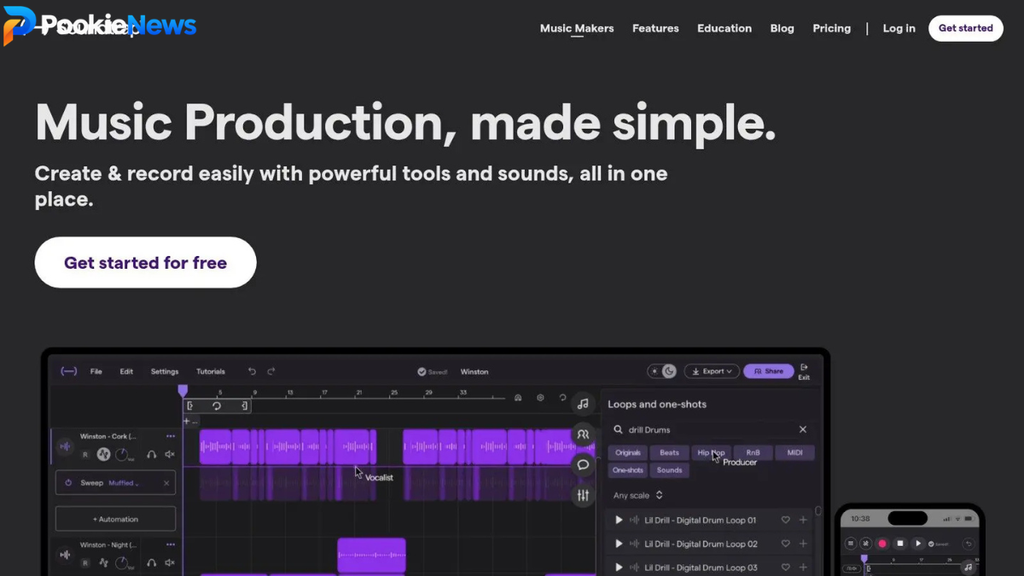
A beginner-friendly application should make it relatively easy to understand the relationship between sounds, tracks, effects, and arrangements.
Clear controls, useful presets, simple project creation, reliable saving, and accessible export options can make the learning process much smoother.
The software does not necessarily need to be basic. It simply needs to make important functions understandable and discoverable.
If Endbugflow is powerful but difficult to navigate, it may still be valuable for advanced users while being less practical for someone producing music for the first time.
Endbugflow for Beat Making
Beat making requires speed and flexibility. Producers often need to create drum patterns, experiment with samples, adjust timing, and build loops into complete arrangements.
A suitable beat-making workflow usually includes a drum sequencer or piano roll, sample management, tempo control, quantization, looping, and easy duplication of musical sections.
If Endbugflow supports these functions, it may be worth testing for beat production. However, those capabilities should be confirmed rather than assumed.
Beat makers should pay particular attention to how quickly the software allows them to move from an idea to a playable pattern. Complicated routing or unnecessary technical steps can slow down the creative process.
For genres such as hip-hop, trap, house, techno, and electronic pop, workflow efficiency is often as important as sound quality.
Can Endbugflow Be Used for Vocal Recording?
Vocal recording is a useful test of whether software can serve as a primary music-production platform.
A vocal workflow typically involves microphone input, audio-interface compatibility, monitoring, multiple takes, editing, timing adjustments, effects, and mixing.
If Endbugflow does not provide these capabilities, it may not be suitable for recording complete vocal songs. You might still use it alongside another DAW, but that means managing two separate applications.
For independent artists, this can add unnecessary complexity. A singer recording demos or finished tracks usually benefits from a stable environment where recording, editing, and mixing happen in one place.
Before choosing Endbugflow for vocals, confirm that it supports the audio hardware you own and that it can manage recording without excessive latency or technical setup.
Endbugflow and Music Mixing
Mixing is the process of balancing individual sounds into a cohesive final track.
A typical mix may include drums, bass, vocals, guitars, keyboards, effects, background layers, and automation. Each element needs appropriate volume, frequency balance, stereo placement, and dynamics.
A music-production application should provide enough control to adjust these elements accurately.
If Endbugflow is primarily designed for sound experimentation or routing, it may offer interesting possibilities but still lack the full mixer workflow required for finished productions.
Before using it for mixing, investigate whether it supports multitrack audio, EQ, compression, automation, buses, sends, panning, and high-quality export.
A producer should not assume that any application capable of manipulating sound is automatically capable of professional mixing.
Endbugflow Software Pros and Cons
Because reliable public information about Endbugflow’s exact music-production capabilities may be limited or inconsistent, its advantages and disadvantages should be evaluated carefully.
Possible Advantages
If Endbugflow provides a specialized or unconventional audio workflow, it may encourage experimentation and creative exploration.
Some musicians enjoy software that works differently from traditional DAWs because it can change how they approach sound creation. A nontraditional interface may inspire new ideas, especially for ambient, electronic, generative, or experimental music.
A specialized tool may also be useful as a supplementary application alongside a standard DAW. In that role, it does not need to replace every part of the production process.
Possible Disadvantages
The main limitation is uncertainty about its exact capabilities.
If Endbugflow lacks standard recording, MIDI, arrangement, plugin support, or mixing features, it may not be suitable as a complete music-production solution.
Another potential issue is the learning curve. Unfamiliar workflows can be rewarding, but they may also require more time and technical knowledge.
Users should also verify pricing, operating-system compatibility, update frequency, documentation, and support before depending on the software for important projects.
Endbugflow vs Traditional Music-Production Software
Traditional DAWs are designed around the complete music-production process. They generally allow users to record, edit, arrange, mix, and export within one application.
Endbugflow may or may not offer the same scope. The comparison should therefore focus on verified functionality rather than assumptions.
| Feature | What to investigate in Endbugflow | Why established DAWs matter |
| Audio recording | Confirm input and recording support | Recording is a core DAW function |
| MIDI editing | Check piano roll and sequencing tools | Essential for virtual instruments |
| Beat making | Verify drum and sample workflows | Important for modern production |
| Arrangement | Check for timeline-based editing | Needed for complete songs |
| Mixing | Confirm mixer and processing tools | Required for polished tracks |
| Plugin support | Verify supported formats | Expands instruments and effects |
| Export | Check available audio formats | Necessary for sharing and release |
| Tutorials | Look for official learning resources | Helps users learn faster |
| Compatibility | Confirm operating systems and hardware | Prevents setup problems |
Established platforms such as Ableton Live, FL Studio, Logic Pro, REAPER, and Pro Tools have well-known production workflows and extensive documentation. That does not mean every established DAW is ideal for every user, but their capabilities are generally easier to evaluate.
Endbugflow Music Software Compatibility
Compatibility should be checked before installing any music software.
A program may support one operating system but not another. It may require specific hardware, plugin formats, audio drivers, or system resources.
Canadian musicians should also consider whether their current computer can handle the software comfortably. Music production can require substantial processing power, especially when using multiple virtual instruments, effects, and high-resolution audio tracks.
Before committing to Endbugflow, verify whether it supports your operating system, audio interface, MIDI keyboard, headphones, external instruments, and existing plugins.
Compatibility problems can be more frustrating than the original software limitations because they may require replacing equipment or rebuilding an entire workflow.
How to Decide Whether Endbugflow Is Worth Trying
A practical evaluation should begin with a small project rather than a major production.
Try to complete one specific task, such as creating a drum loop, recording a short melody, building a synth sound, arranging a few tracks, or exporting a short composition.
Observe how easily you can complete the task. Does the interface make sense? Can you save and reopen projects? Does the audio behave reliably? Can you export the result in a useful format?
You should also consider whether the software makes you more productive or simply more curious. Curiosity is valuable, but a primary production tool needs to support consistent results.
A free trial, demo version, or test project is usually the best way to evaluate unfamiliar music software before spending money.
Who Might Benefit From Endbugflow?
Endbugflow may be worth exploring for users who are interested in unconventional audio workflows, technical experimentation, or specialized sound creation—if those capabilities are confirmed.
It may be less appropriate for someone who simply wants an easy way to record vocals, create beats, and finish songs without a steep learning curve.
The distinction is between a creative experiment tool and a complete production workstation. Both can be useful, but they solve different problems.
A musician should choose based on whether the software supports the kind of work they intend to do regularly.
My Opinion on Should I Use Endbugflow Software for Making Music
My view is that Endbugflow should be approached as a product to evaluate carefully rather than automatically adopted as a primary music-production platform.
The central issue is not whether the software sounds innovative or appears frequently in search results. The issue is whether its confirmed features match the practical needs of music production.
For users who want to record, arrange, mix, and release complete songs, a well-documented DAW is generally the more straightforward starting point. For users interested in experimental workflows, Endbugflow may be worth investigating if reliable documentation confirms that it provides useful audio capabilities.
The most responsible decision is to test the software against a real project and compare the results with the tools you already understand. A good music application should help you spend more time creating music and less time dealing with uncertainty.
Frequently Asked Questions About Should I Use Endbugflow Software for Making Music
Is Endbugflow a music-production software?
Its exact classification should be verified through official documentation. Public descriptions may not consistently establish whether it is a full DAW, a specialized audio tool, or software intended for another purpose.
Is Endbugflow good for making music?
It may be useful depending on its confirmed features. Before choosing it, check whether it supports recording, MIDI, arrangement, mixing, plugins, and audio export.
Can beginners use Endbugflow for music production?
Beginners can test it, but its suitability depends on how easy it is to learn and whether reliable tutorials are available. A conventional DAW may be more accessible for learning standard production techniques.
Can Endbugflow replace a traditional DAW?
That depends on whether it provides the same core capabilities. If it lacks recording, arrangement, mixing, or export features, it may work better as a supplementary tool.
What should I check before using Endbugflow?
Verify its official website, actual features, system requirements, operating-system support, pricing, plugin compatibility, documentation, and audio-export capabilities.
Conclusion
The question “should i use endbugflow software for making music” should be answered through practical testing rather than assumptions.
If your goal is complete music production, confirm that Endbugflow can handle the essential tasks involved in recording, sequencing, arranging, mixing, and exporting. If it is a specialized tool, it may still have value for experimentation or sound design without replacing your main DAW.
The right software is the one that matches your creative goals, technical setup, budget, and preferred workflow. Before committing, verify the product’s capabilities and test it with a small real-world music project and more.
